

Pigmentation That Keeps Returning: Why Treating Dark Spots Requires More Than Surface-Level Care

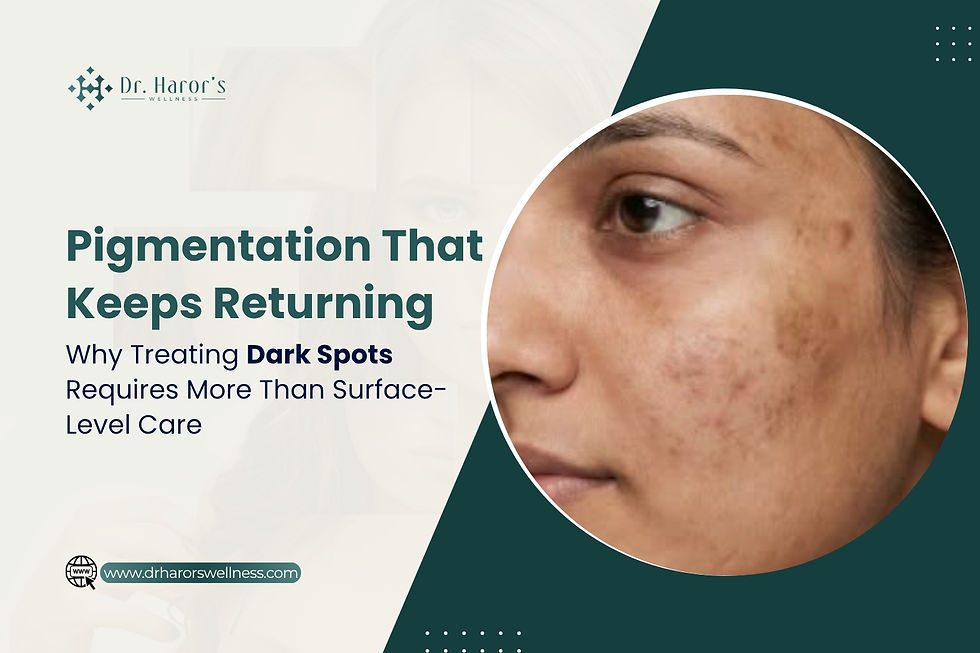
From expensive skin creams to home remedies, you may have tried everything to get rid of patches, but they keep coming back after a few weeks or months. You're not alone; recurring pigmentation can be frustrating, especially when you're following a good skincare routine. The solution lies deeper in the skin. This means stressors like prolonged sun exposure, hormonal changes, and inflammation can stimulate excess melanin production and cause skin pigmentation. If your pigmentation keeps returning, understanding the underlying cause is key to preventing it with the best pigmentation treatment in Delhi and achieving a flawless and radiant skin tone.
What Is Skin Pigmentation?
Pigmentation is the most common skin-related issue that is mostly caused by the overproduction of melanin. When melanin is imbalanced, it can result in dark spots or patches on different areas of the body, particularly the neck, face, hands, and arms.
Types of skin pigmentation
Melasma: Brown or grey patches that often appear on the cheeks, forehead, and upper lip. Hormonal changes and sun exposure usually cause it.
Sunspots: Dark spots that are caused by sun exposure.
Post-inflammatory hyperpigmentation: Dark spots that can occur after various skin conditions such as acne, injury, skin irritation, and inflammation.
Freckles: Small brown spots that can develop in the facial skin because of prolonged sun exposure
Why does pigmentation occur?
Pigmentation occurs when the body overproduces melanin, which can be caused by many factors.
Sun exposure: UV rays can increase melanin production. This can darken existing pigmented spots. If you don't protect your skin from the sun regularly, pigmentation can reappear.
Hormonal changes: Melasma can be caused by hormonal changes, pregnancy and certain medications. These patches can darken if exposed to sunlight or visible light.
Irritation and acne: Pimples, skin irritation, and aggressive skincare products can leave dark marks known as post-inflammatory hyperpigmentation. Picking at acne or using harsh exfoliants may make these marks worse.
Incorrect treatment: Using the wrong products can worsen the problem. Some whitening products can irritate your skin, so using them too early can increase your risk of developing pigmentation.
Why over-the-counter products won't always work?
Many people try using OTC medications, topical skin products and natural remedies to lighten their dark spots. While some products can help, they may not target the main cause, which can worsen pigmentation-related concerns.
For example, melasma often requires ongoing maintenance and careful sun protection. Acne-related pigmentation may improve when both active acne and the resulting marks are treated appropriately.
To find the best pigmentation treatment in Delhi, consult a qualified skin specialist who will consider your needs and determine the right treatment.
The Importance of Consulting a Dermatologist
A dermatologist can assess pigmented areas, review the products you use, and identify what may be causing it. Depending on your diagnosis, they can prescribe products, recommend ingredients to reduce hyperpigmentation, or suggest chemical peels or laser treatments.
Not all patients will need something more advanced. You will want to treat your pigmentation based on the type you have, your skin tone, your medical history and how you have responded in the past.
To find the best dermatologist in Delhi, look for a qualified professional who can explain the benefits and drawbacks of each treatment, as well as any side effects. This can help create a personal plan to reduce pigmentation and lower the risk of irritation.
Daily Habits That Help Prevent Pigmentation
To double the effect of the best pigmentation treatment in Delhi, consistently follow a good skincare routine.
Use broad-spectrum sunscreen: Apply SPF 30 or higher daily and reapply as directed, especially during prolonged outdoor exposure.
Avoid harsh products: Choose gentle cleansers and avoid excessive exfoliation or unverified skin-lightening remedies.
Treat acne early: Appropriate acne care can help prevent new dark marks.
Follow your treatment plan: Use prescribed products as directed and attend follow-up appointments when recommended.
Conclusion
Pigmentation is mainly caused by direct sun exposure, acne, aging, hormonal changes, or genetics. While early prevention helps maintain skin quality, a qualified skin specialist in Delhi can deliver faster, more effective results with the best pigmentation treatment in Delhi. If you're looking for the best skin treatment in Delhi, book a session with Dr. Haror's Wellness. The clinic is led by a qualified skin specialist with years of experience treating various skin concerns with the right treatment. Book your session now!
FAQs
1. Why does skin pigmentation keep coming back?
Pigmentation can return due to sun exposure, hormonal changes, acne, or skin irritation. Consistent sunscreen use and suitable treatments can help prevent recurrence.
2. What is the best treatment for recurring skin pigmentation?
Treatment depends on the type and severity of pigmentation. A dermatologist may recommend topical creams, chemical peels, microneedling, or laser treatment based on your skin condition.
#BestPigmentationTreatmentInDelhi #BestDermatologistInDelhi #AntiAgeingTreatmentInDelhi #SkinTreatment #AntiAgeingTreatment #BestSkinTreatmentClinicInDelhi #BestSkinCareClinicInDelhi #BestSkinSpecialistInDelhi #SkinTreatmentInDelhi #DrHarorsWellness #SkinTreatmentCostInDelhi #BestDermatologistInDelhiNCR #DermatologistDelhi #SkinTighteningTreatment #SkinDoctorInDelhi #BestSkinTreatmentClinicInDelhi


Comments