

HydraFacial vs Facial: What’s the Difference and Which One Is Better for Your Skin?


Today, everyone is conscious of their look because personality and appearance play a vital role in leaving a positive impression. That's why people today are looking for the best dermatologist in Delhi NCR who can deliver a glowing skin tone and improved skin quality. A regular facial is a go-to skin treatment people often choose for deep pore cleansing, exfoliation, and removing dead skin. But there's one more advanced version of traditional facial treatment that provides long-term benefits and has gained a lot of traction: HydraFacial skin treatment. Regular facial vs. HydraFacial skin treatment: which one is better? If you're wondering the same thing, this blog is for you. This blog briefly breaks down traditional and modern facial treatments to help you make an informed decision and choose the right skin treatment.
What Is a Traditional Facial?
A traditional facial is a cosmetic procedure that typically involves basic care and maintenance, such as cleansing, exfoliating, steaming, extractions, massaging, and a face mask. The products used may be selected according to your skin type. A facial is a great option if you want to reduce dryness and dullness and achieve a healthy, smooth, fresh appearance. A facial is designed primarily for maintenance, not intensive professional treatments. However, the quality and results of a facial can vary depending on the products, techniques, and expertise of the person performing it.
What Is a HydraFacial?
A Hydrafacial is a modern, non-surgical procedure that renews and improves your skin. It is a complex treatment involving several steps that hydrate and refresh your face. The procedure begins with a gentle, standard skin cleaning to remove impurities and dead cells from the surface. Next, a vacuum-like device extracts dirt, oil, and other impurities from the pores. This step is completely painless and helps remove blackheads and other unsightly blemishes. Finally, the skin is cleansed and rejuvenated using a special blend of serums. HydraFacial is generally considered a non-invasive treatment with little to no downtime, only consult the best skin specialist in Delhi NCR to avail the best results from a session.
HydraFacial vs Facial: Know the Difference
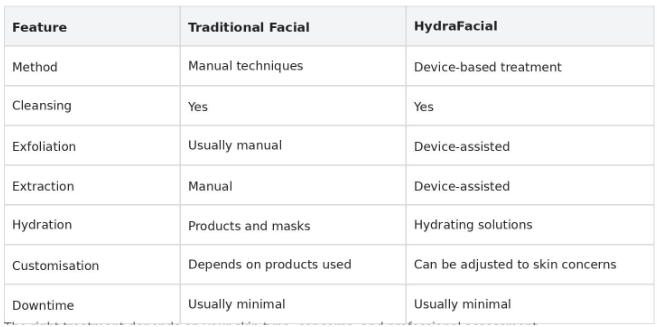
Which One Is Better for Your Skin?
A traditional facial is a good option if you want to cleanse, relax, and do basic skin maintenance. However, if you are concerned about your skin's appearance or want to address specific issues, such as oily skin, loss of hydration, uneven complexion, or lack of radiance, it’s best to consider a HydraFacial treatment. In addition, some skin conditions, including acne, uneven pigmentation, rosacea, and other issues, require more intensive treatment and should be treated by the best dermatologist in Delhi NCR. A professional skin examination can help determine the best treatment for your case.
Conclusion
A traditional facial and a HydraFacial both improve the skin’s appearance, but they use different approaches. A facial primarily involves cleansing, exfoliating, massaging, and applying skincare products, while a HydraFacial uses a special device to combine cleansing, exfoliation, extractions, and hydration. The right choice depends on your skin and your goals. Instead of choosing a treatment based only on popularity, consult a best skin specialist in Delhi NCR to determine what suits your skin. If you're looking for an effective skin treatment, then book your consultation with Dr. Haror's Wellness. Their team of professional skin specialists will provide dedicated support and the best treatment, helping everyone reclaim improved skin quality and a radiant skin tone that lasts.
FAQs
Is HydraFacial appropriate for all skin types?
While the treatment is generally safe and gentle for all skin types, a person with sensitive skin or a skin condition should consult their dermatologist before trying it.
How often can one get a HydraFacial?
Treatment frequency depends on skin type and condition. Discuss this with your dermatologist during a consultation.

Comments